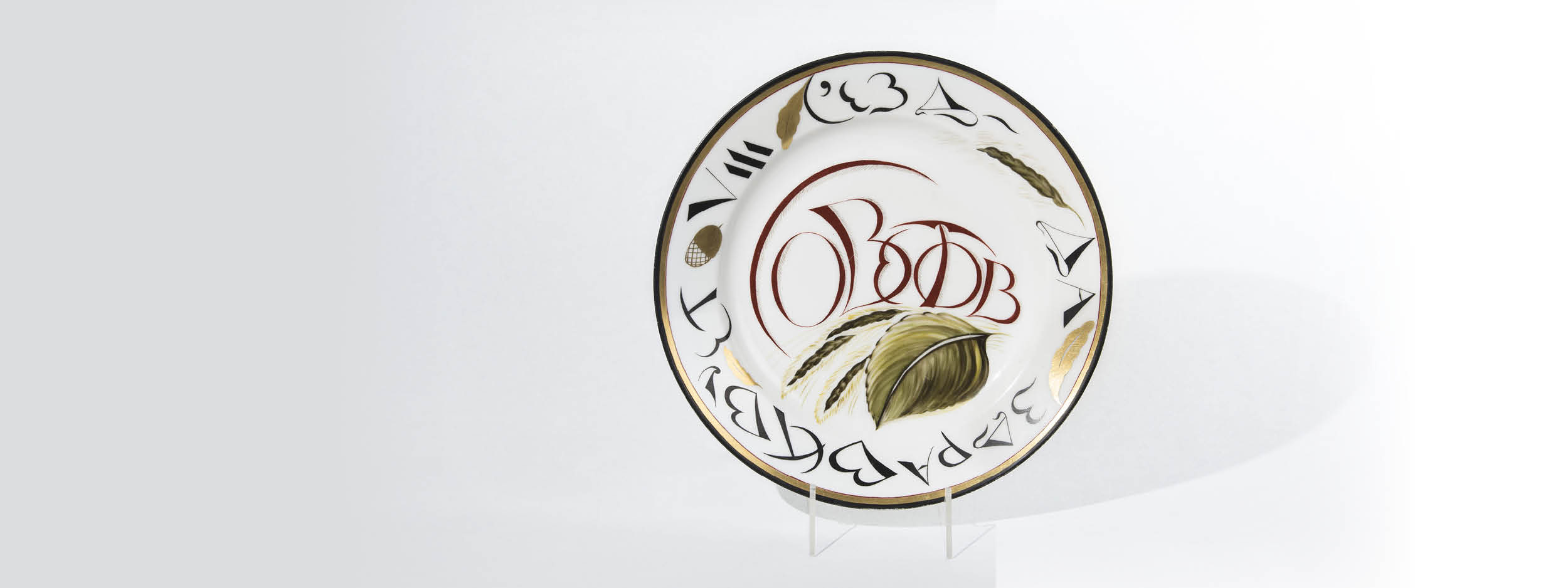
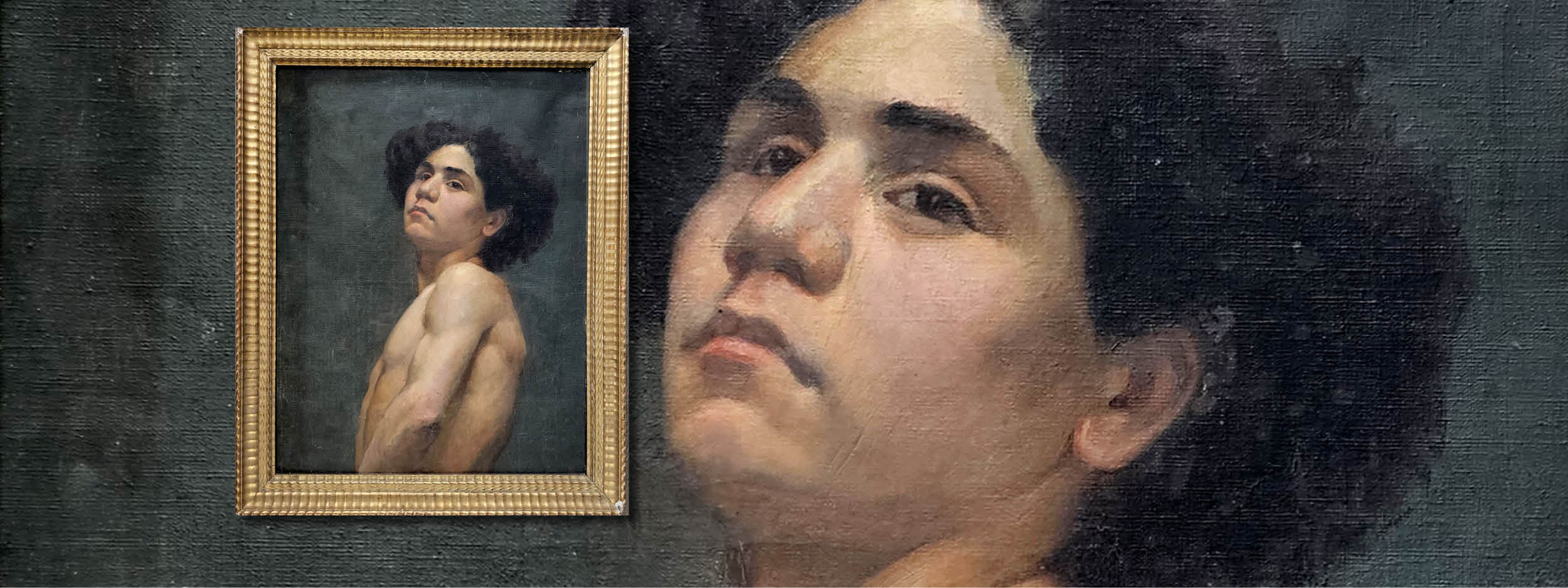
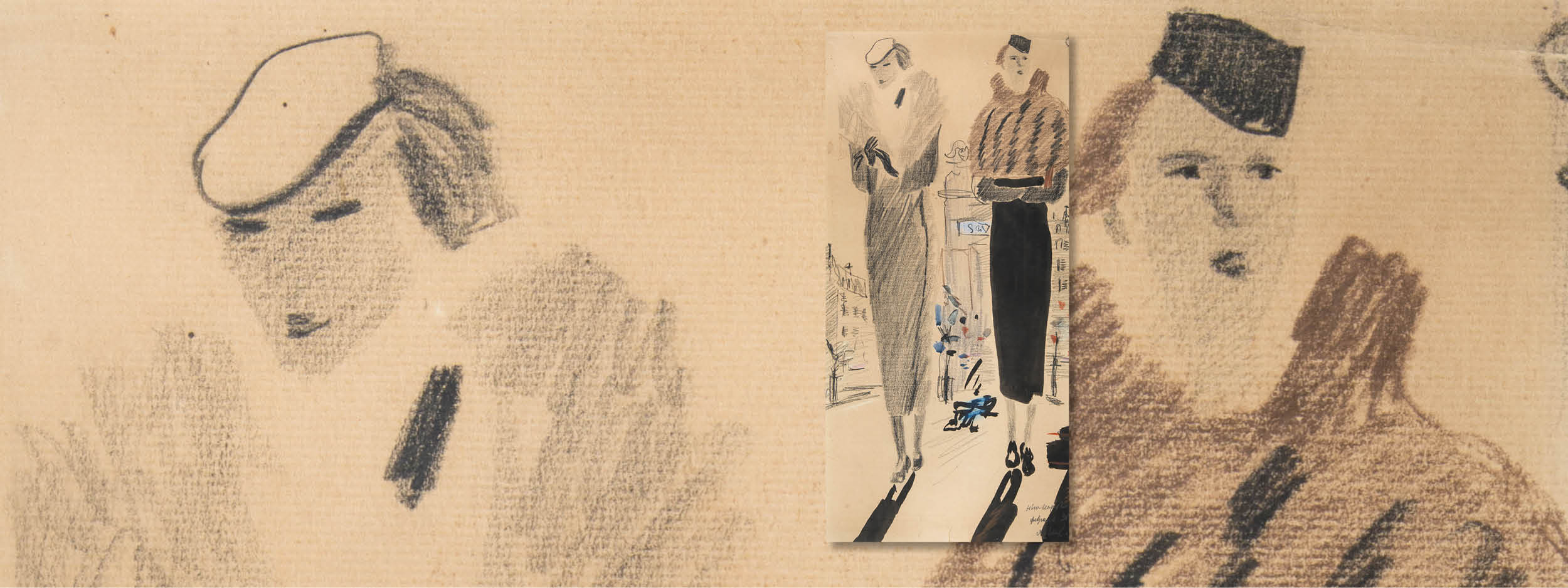
Russian art at Osenat, between Versailles and Paris
Peter the Great’s visit to Versailles in 1717 opened three centuries of exchanges and mutual fascination between Russia and France, from the Napoleonic wars to the close ties of Alexander III’s reign and Diaghilev’s Ballets Russes. Over this shared history, and even more so with the emigration, many Russian paintings, icons and works of art found their way to France.
Renowned for its sales of historical memorabilia, particularly from the Napoleonic period, Osenat opened a department dedicated to Russian and Eastern European art. Its auctions are held at the Hôtel des ventes du Château in Versailles and at the Galerie de Breteuil in Paris.
The department is run by Mariia Vikhrova. Works are researched with the experts Edgar Clin and Thomas Morin-Williams, and more than 2,000 objects are valued every year.
Russian paintings: from 19th-century masters to the avant-garde
Our sales present Russian painting from the 19th to the 21st century, including:
- Landscapes and genre scenes: Nikolay Sergeev, Ivan Choultse, and Mikhail Belaevsky with his view of Samarkand.
- The turn of the 20th century: Konstantin Korovin, Dimitri Stelletsky, Sergei Sudeikin, Zinaida Serebriakova.
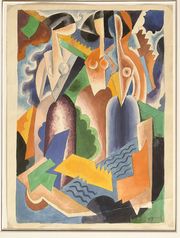
- The Russian avant-garde, with gouaches by Natalia Goncharova.
- Émigré artists who settled in France after the Revolution, whose works have often remained in the same families.
- Sculpture, such as the portrait of Leo Tolstoy by Naum Aronson.
Icons, silver and historical memorabilia
Every period of Russian art is represented, from Old Russia to the imperial family, from the Revolution to White Russia:
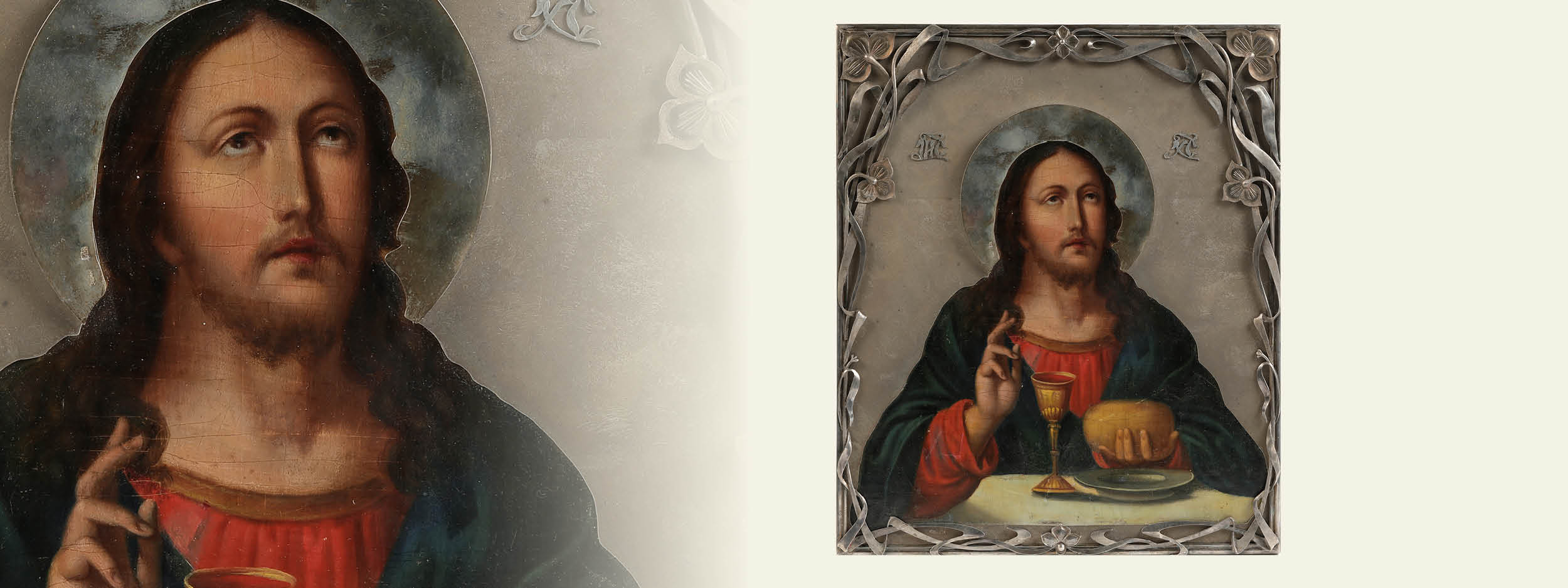
- Icons, both antique and more recent.
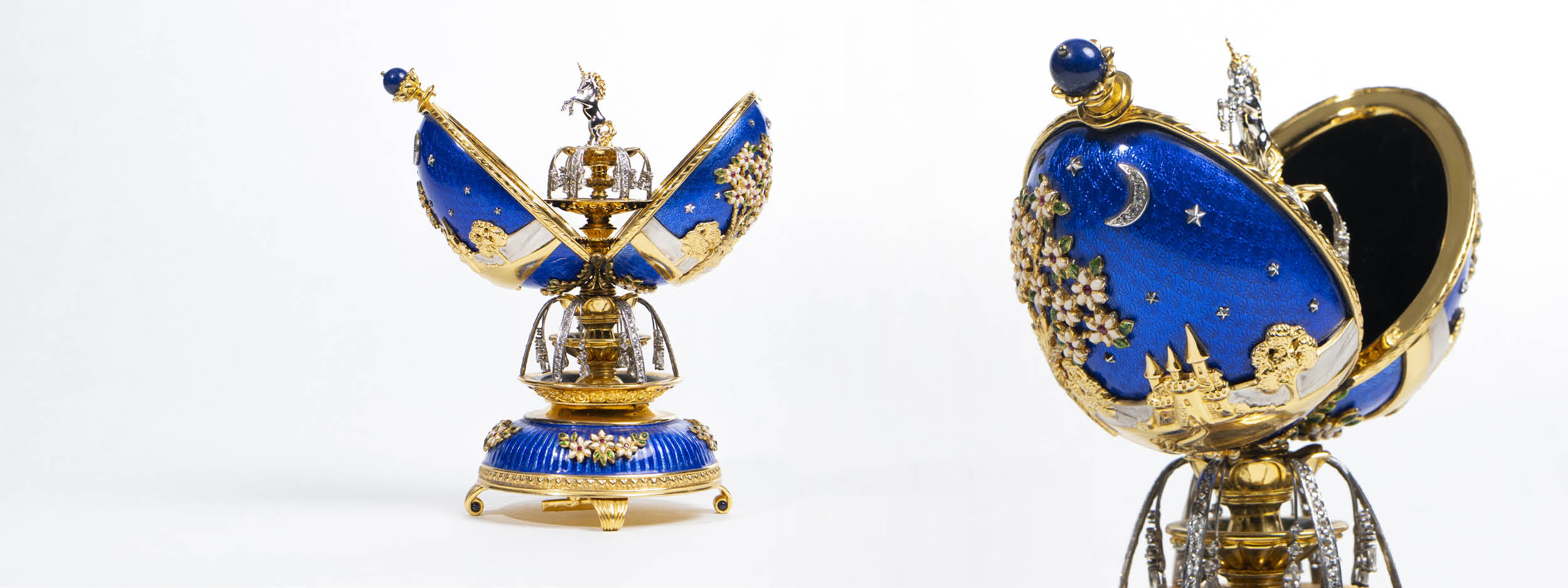
- Silver and works of art, including those by suppliers to the imperial court, such as this kovsh by O. Kurliukov made in Moscow.
- Documents, autographs and rare books: deeds signed by Paul I, correspondence on the 1812 fire of Moscow, autographs from the emigration.
- Early photographs of the Russian Empire, the Caucasus and Central Asia.
- Eastern European art: Ukraine, Georgia, Romania, Moldova…
Sales followed by collectors
In April 2024, Nikolay Sergeev’s La Fenaison (Haymaking, 1896), estimated at €12,000–18,000, sold for €90,720.
Every work consigned to us is catalogued in French and Russian, photographed and promoted to collectors, enthusiasts, museums and institutions, who bid in the saleroom, by phone or online.
See our upcoming auctions in Versailles and our auctions in Paris, as well as our past auction results.
Get a valuation or sell a work of Russian art
Do you own a painting signed in Cyrillic, an icon, a hallmarked silver object or documents brought back from Russia? Their value depends on the artist or silversmith, the period, the quality, the condition and the provenance. The history of the work matters too: write down everything you know about its journey (purchase, emigration, family inheritance).
Our valuations are free, confidential and without obligation. Send us a few photographs through our Russian and Eastern European art valuation form (in French): our experts reply within 24 hours. You can also meet us by appointment in Fontainebleau, Versailles, Paris or Chailly-en-Bière, or every Wednesday without an appointment during our valuation days. To find out more, see how to sell with Osenat.
Frequently asked questions
How much is an antique Russian icon worth?
It depends on its period, the quality of the painting, its condition and whether it has a precious metal cover. Surprises do happen: a 20th-century icon of Saint Anne, estimated at €300–500, sold for €11,370. Only an examination by a specialist can give an accurate valuation.
How can I identify Russian silver?
Hallmarks are the first clue: they often indicate the maker, the city, the date and the silver standard. Photograph them close up, together with the whole object: our experts will identify them free of charge.
My painting is signed in Cyrillic: could it be valuable?
Yes, if the artist, the subject and the quality are there: a landscape by Nikolay Sergeev estimated at €12,000–18,000 sold for €90,720. Send us photographs of the work, the signature and the back.
Where can I sell Russian art at auction?
Our “Russian and Eastern European Art” auctions take place in Versailles and Paris. Dates are announced in our auction calendar.
💬 Do you own a Russian painting, icon or work of art?