

Lot n° 86
Estimation :
20000 - 30000
EUR
Result with fees
Result
: 24 600EUR
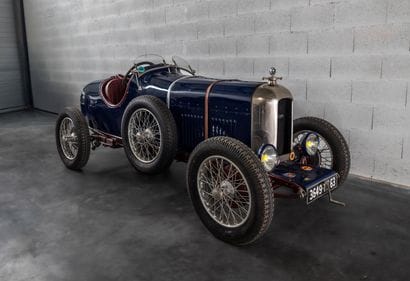
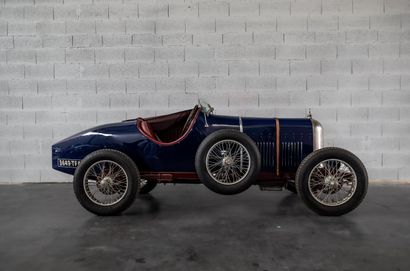
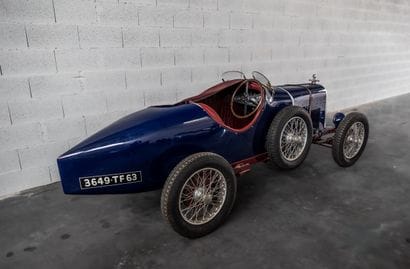
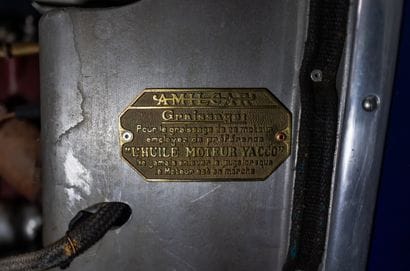
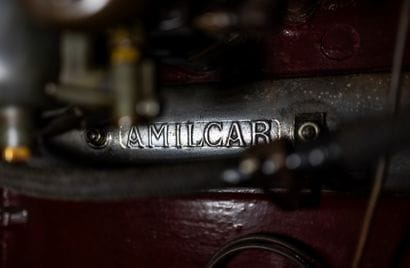
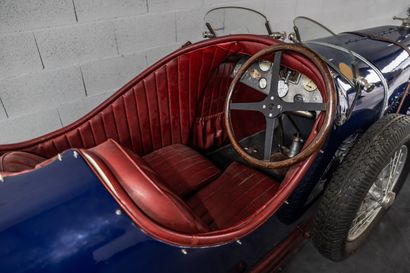
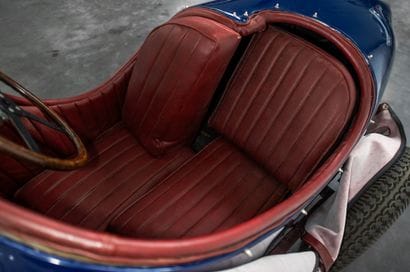
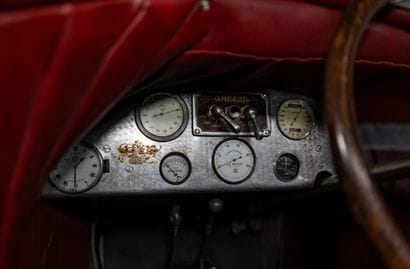
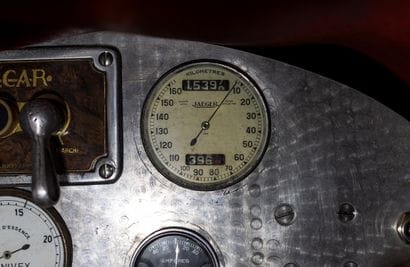
C1925 AMILCAR (cycle car reconstruction) - Lot 86
C1925 AMILCAR (cycle car reconstruction)
French registration (CGS)
Chassis CGSS n° 19146
Same owner for 32 years
Amilcar was born from the meeting of 4 men: André Morel and Edmond Moyet for the technical side, and Emile Akar and Joseph Lamy for the financial side. André Morel worked for the Le Zèbre company and Edmond Moyet was a collaborator of Jules Salomon at Citroën on the 5 CV project. He worked at home in the evenings on his personal project: building a cyclecar. He then met A Morel, but the project lacked financial backing.
André Morel put the young engineer in touch with Emile Akar, who owned a large stake in Le Zèbre, and Joseph Lamy, the company's sales manager. The two men were won over by Edmond Moyet's project, which was well advanced, and agreed to build the cyclecar. Amilcar was born (an anagram of the names of the two directors Lamy and Akar). And this in 1921. That same year, André Morel won the kilometer throw in Lyon in his category. The Amilcar cyclecar was launched!
It's worth remembering that France was just emerging from the war. The government was looking to revive the economy through industry, and of course the automobile. It created a regulation on "cyclecars" which reduced the annual tax on this new category of small cars, less taxed than real automobiles. As a result, many manufacturers began producing cyclecars. These original, simplistic creations were the result of a compromise between the motorcycle and the small car.
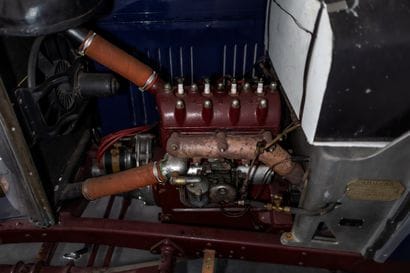
Many cyclecars also made their mark in various competitions. First of all, the CS (Cycle Sport), aimed at sporty customers for its performance, with a sharp aluminum sports body, the brand's first "Bordino point", all in 1922. DUVAL's "racing" bodies feature two staggered seats, with aluminum sheet metal toe-the brand's first "Bordino toe", all in 1922. DUVAL's "racing" bodies feature two staggered seats, with aluminum sheet metal tips. At the 1923 Motor Show, Amilcar presents its new model: the CGS! It incorporated all the technical improvements brought about by racing. The CS engine was re-bored to 1,074 cm3, the cylinder head was changed, the camshaft was specially reinforced, the valves were larger, etc. The chassis was perfectly adapted to the bodywork, with semi-elliptic leaf springs at the front and a braked axle. This four-wheel braking system was patented by Amilcar. More expensive than its competitors, it was aimed at a more affluent clientele in search of a high-performance buggy ahead of rival brands. Of all the sports cars produced in France after the First World War, Amilcar's best-known and most popular was the CGS! Another celebrity added to the Amilcar myth: Isadora Duncan, who lived a life too short for a scarf too long on the Promenade des
des Anglais!
The model presented here has belonged to the same owner since 1993. This car has been on display in a museum for some years, so we recommend that you take it for a spin.
C1925 AMILCAR
French Title
Chassis no. 19146
Type CGS
Same owner for 32 years
€40,000 / €60,000
Amilcar was born from the meeting of four men: André Morel and Edmond Moyet for the technical side, and Emile Akar and Joseph Lamy for the financial side. André Morel worked for Le Zèbre and Edmond Moyet was a colleague of Jules Salomon at Citroën on the 5 CV project. He worked on his personal project, building a cyclecar, at home in the evenings. He then met A Morel, but there was a lack of finance.
André Morel then put the young engineer in touch with Emile Akar, who had significant capital at Le Zèbre, and Joseph Lamy, who was the sales director. The two men were won over by Edmond Moyet's project, which was already well advanced, and agreed to build the cyclecar. Amilcar was born (an anagram of the names of the two directors, Lamy and Akar). This was in 1921. That same year, André Morel won the flying kilometre race in Lyon in his category. The Amilcar cyclecar was launched!
It should be remembered that at that time, France was struggling to recover from the war. The state was seeking to revive the economy through industry and, of course, the automobile. It created regulations on 'cyclecars' that reduced the annual tax on this new category of small cars, which were taxed less than full-size automobiles. As a result, many manufacturers began producing cyclecars. These original and simplistic creations were the result of a compromise between motorcycles and microcars.
Many cyclecars also ma
My orders
Sale information
Sales conditions
Return to catalogue