


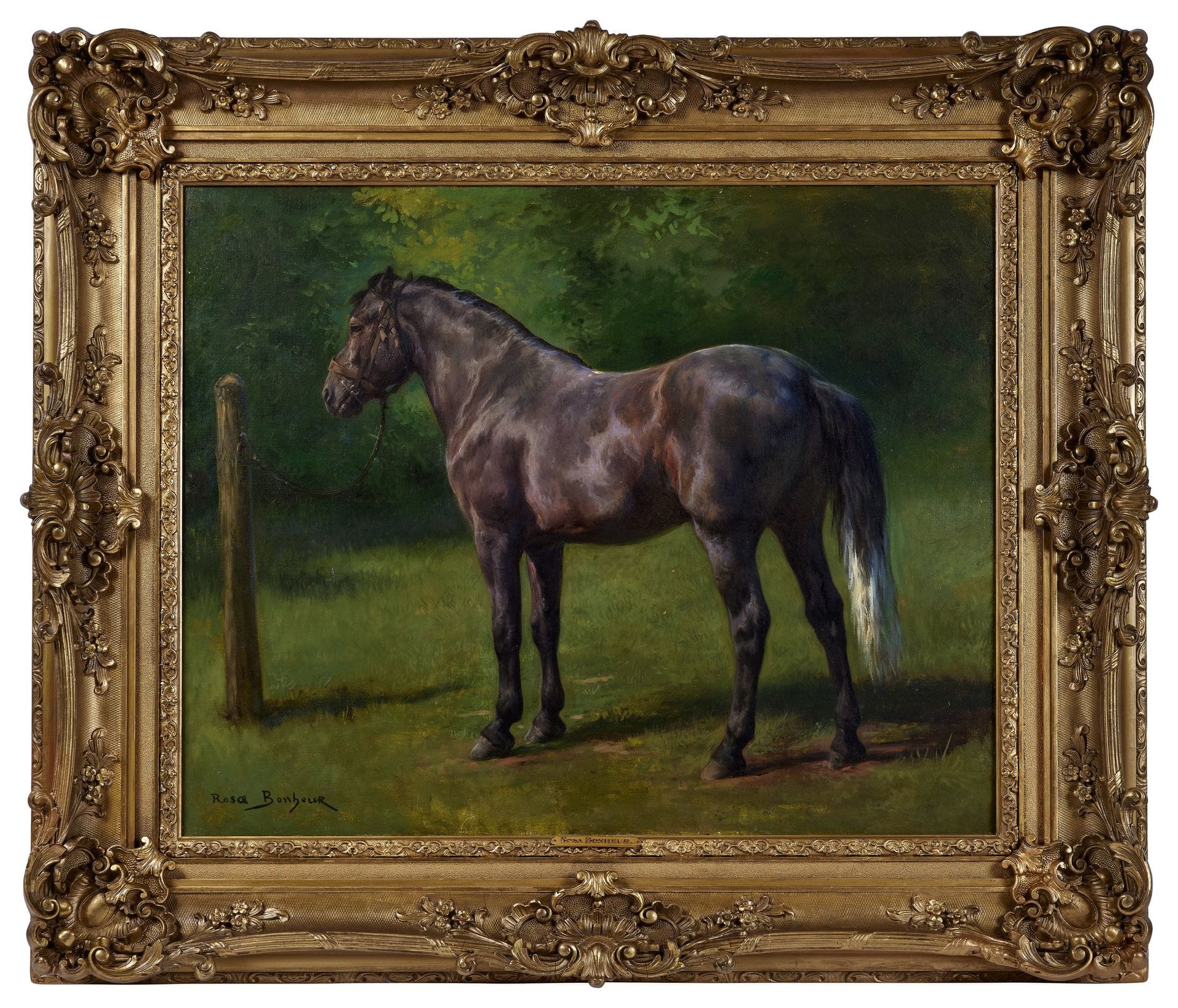
Rosa Bonheur (1822-1899)
Étude de cheval brun, oil on canvas
Estimate €18,000–25,000, sold for €64,000 at Osenat in July 2026
Getting a Barbizon School painting valued: prices and value
Have you inherited a forest landscape, a rural scene or a study signed with a 19th-century name? Before selling it, you need to know what it is worth. Advice from Osenat, in Fontainebleau, at the heart of Barbizon country.19th-century paintings department
Does your painting belong to the Barbizon School?
The Barbizon School brings together the painters who, from around 1830 to 1870, worked from nature in the forest of Fontainebleau: Théodore Rousseau, Jean-François Millet, Narcisse Diaz de la Peña, Camille Corot, Charles-François Daubigny, Jules Dupré, Constant Troyon, Charles Jacque, and around them Rosa Bonheur, Henri Harpignies and Georges Michel. A few clues help identify a Barbizon School painting:
- The subject: undergrowth, oaks, ponds, rocks, heathland, forest paths, rural scenes, shepherds and herds.
- The handling: painting from nature, often on panel or paper for studies, in a palette of greens, browns and changing skies.
- Marks on the back: dealers’ or exhibition labels, wax seals, inventory numbers. They tell the story of the work.
- Studio stamps: after the death of several of these artists, their studios were sold at auction and the works marked with a stamp. The Étude de cheval brun above thus bears Rosa Bonheur’s signature stamp and, on the back, a wax seal reading “Vente Rosa Bonheur 1900”.
Signature and attribution: what you need to know
A signature alone does not authenticate a painting. The great names of Barbizon had many pupils and followers, and some, like Corot, are among the most imitated painters of the 19th century. In a French auction catalogue, the wording therefore has a precise meaning:
- the artist’s name alone: the work is given to the artist;
- “attribué à” (attributed to): the work is very probably by the artist, with a reservation;
- “atelier de”, “entourage de”, “école de Barbizon” (studio of, circle of, Barbizon School): the work is linked to the artist or the movement, without being given to the artist.
For major artists, the opinion of the author of the catalogue raisonné matters greatly. In our sales, the authenticity of several works by Théodore Rousseau and Georges Michel was confirmed by Michel Schulman, and that of a watercolour by Henri Harpignies by Dr Cappoen. Our expertise also draws on the De Bayser, Turquin, Maréchaux and Morin-Williams firms.
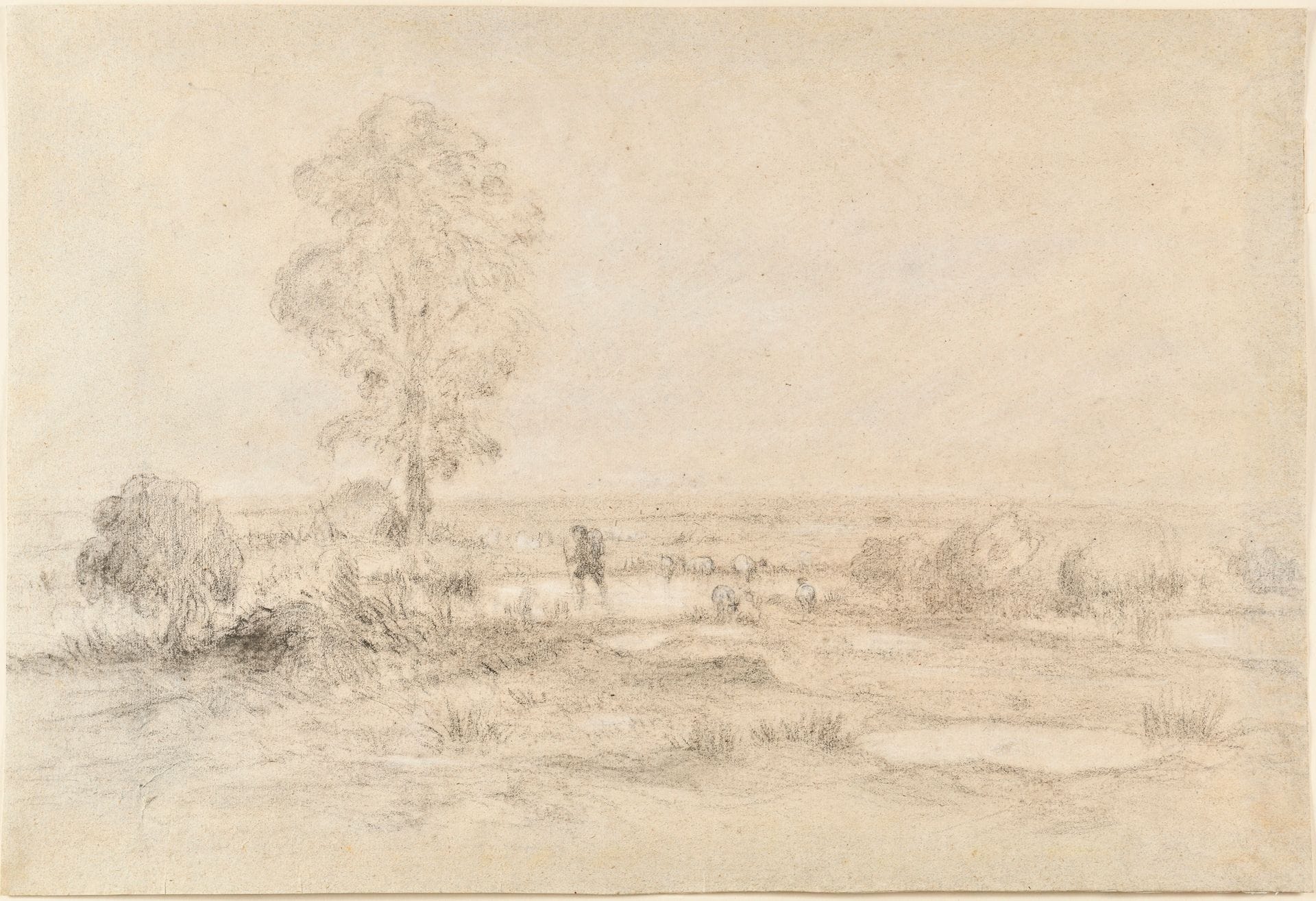
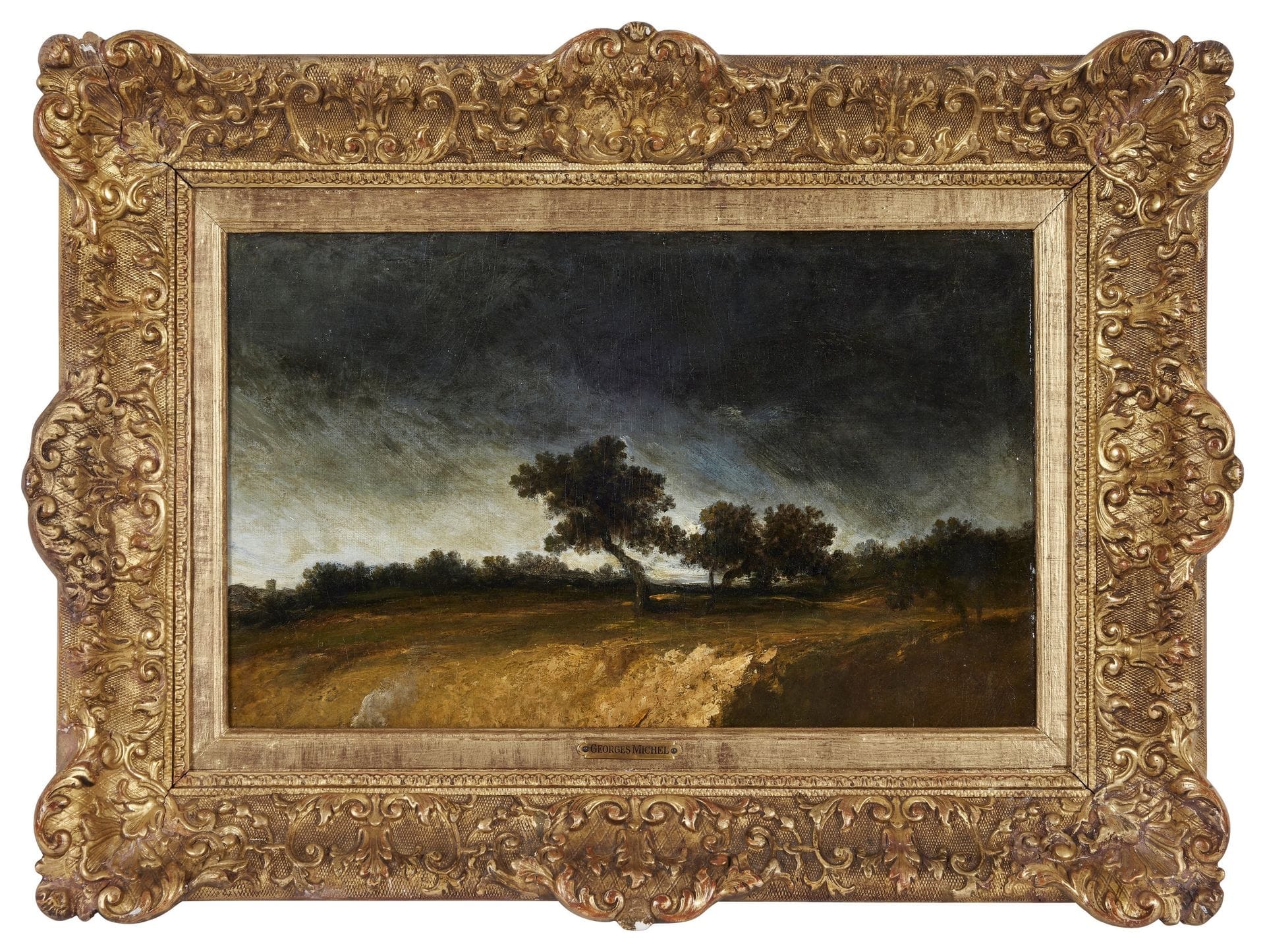
Left: Théodore Rousseau, Le berger dans les Landes, charcoal, sold €6,552 (April 2024). Right: Georges Michel, Coup de soleil après la pluie, sold €6,400 (March 2026).
Barbizon School prices: our recent results
- Rosa Bonheur: Étude de cheval brun, estimate €18,000–25,000, sold €64,000 (July 2026).
- Théodore Rousseau: Chemin en forêt de Fontainebleau, oil on panel, circa 1850, estimate €8,000–10,000, sold €12,160 (July 2026). His drawings sell for a few hundred to several thousand euros: Récolte dans un verger €882, Mare en forêt de Fontainebleau €1,764, Le berger dans les Landes €6,552 (April 2024).
- Georges Michel, a forerunner of landscape painting from nature: Coup de soleil après la pluie, estimate €1,500–2,000, sold €6,400, and Personnages en chemin après la pluie, sold €6,144 (March 2026).
- Jean-François Millet: Étude de jeune fille et reprise d’une tête, black pencil drawing, estimate €700–1,000, sold €3,780 (April 2024).
- Henri Harpignies: Le peintre sur le motif, 12 × 16 cm watercolour, estimate €300–400, sold €1,260 (April 2024).
Prices include buyer’s premium. These examples show that estimates are often exceeded when a work is authenticated, fresh to the market and presented to the right collectors.
What gives a Barbizon painting its value
- The artist: the great names (Rousseau, Millet, Corot, Diaz, Rosa Bonheur) do not command the same prices as lesser masters or works simply catalogued “Barbizon School”.
- Technique and size: a finished oil is generally worth more than a sketch or a drawing, but a fine drawing by a great name remains sought after.
- The subject: a motif typical of the artist, such as Rosa Bonheur’s horses or Rousseau’s undergrowth, is in greater demand.
- Condition: restorations, relining, yellowed varnish or losses affect the price.
- Provenance: a studio sale, an old collection or a documented exhibition reassure buyers. Rousseau’s Le berger dans les Landes came from the collection of the Counts Doria.
- Authenticity: the opinion of the artist’s specialist or inclusion in the catalogue raisonné.
How to get your painting valued at Osenat
- 1. Photograph the work: an overall view, the signature, the back (stretcher, labels, stamps), and note the dimensions.
- 2. Send them through our 19th-century paintings valuation form: our specialists reply within 48 hours.
- 3. Or meet us in Fontainebleau, at the Hôtel d’Albe, by appointment, or during our valuation days.
- 4. If you decide to sell, your painting is researched, photographed and offered in one of our three annual “L’Esprit du XIXe siècle” auctions, with bidding in the saleroom and online.
The valuation is free, confidential and without obligation. There is no need to clean or restore the painting before showing it to us: our specialist will tell you whether any work is worthwhile.
Why sell a Barbizon painting in Fontainebleau?
Based a few kilometres from Barbizon and Chailly-en-Bière, Osenat has been holding auctions devoted to 19th-century painting for 30 years. These sales are followed by collectors, French and international galleries and museums, which buy regularly. Discover our 19th-century paintings department and our next auction on Sunday 22 November 2026.
Frequently asked questions
How much is a Barbizon School painting worth?
From a few hundred euros for a small study or a painting catalogued “Barbizon School” to several tens of thousands of euros for a fine work by Rosa Bonheur or Théodore Rousseau. Only a valuation by a specialist can place your painting.
My painting is catalogued “Barbizon School”: is it worth anything?
Yes, these landscapes painted from nature have their admirers. Their price is generally more modest than that of a work attributed to an identified artist, hence the value of a careful examination of the signature, the style and the back.
Should I clean the painting before having it valued?
No. Clumsy cleaning can damage the paint layer and reduce the value. Show it to our specialist as it is.
Does the valuation commit me to selling?
No. The valuation is free and without obligation; you remain free to sell or keep your painting.
Contact
Julie Alves
Specialist, 19th-century paintings department
+33 (0)6 88 45 76 56
j.alves@osenat.com
Next auction
L’Esprit du XIXe siècle
Sunday 22 November 2026 at 2 pm
Hôtel d’Albe, 9-11 rue Royale, 77300 Fontainebleau, France